Cotton Block Print Dress: Why Pure Cotton Is the Best Fabric Choice
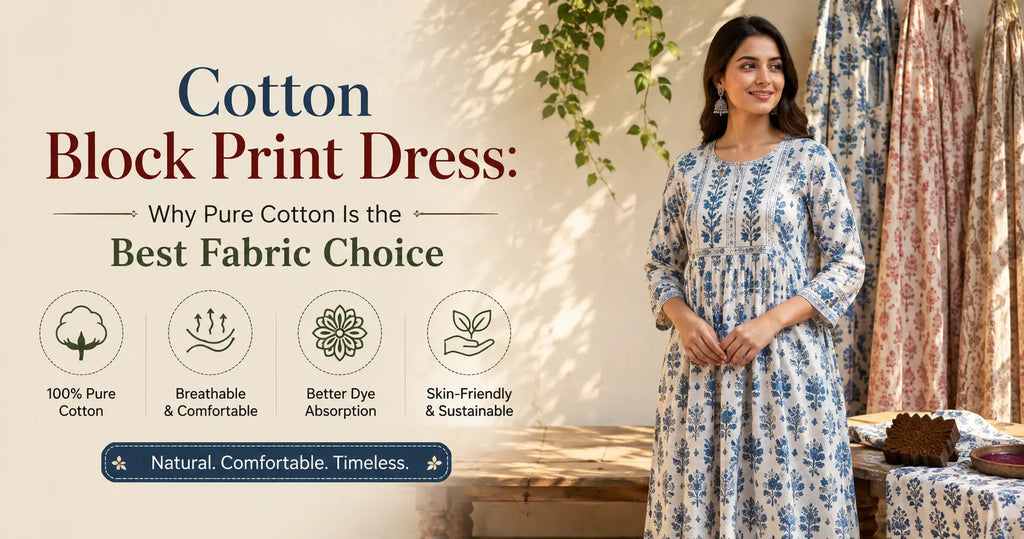
Most people shopping for a cotton block print dress focus on the pattern first - which print, which colour, which silhouette. Fabric usually comes second, if it's considered at all. That's a mistake, because the fabric is doing more work than the print is. Here's why cotton specifically, not just any fabric, is the right base for a block print dress, and how to tell if what you're buying is actually pure cotton.
Why Fabric Matters as Much as the Print
A hand-carved pattern is only as good as the surface it's printed on. The same motif looks and feels completely different on stiff polyester than it does on soft, breathable cotton. Fabric affects how a dress drapes, how it wears through a hot day, and, less obviously, how well it holds the print itself over time.
What Makes Cotton the Right Fabric for Block Printing
Cotton is a natural fibre, and natural fibres absorb dye differently than synthetic ones. Traditional block printing dyes, especially natural dyes like indigo and madder root, bond more evenly and more permanently with cotton's fibre structure than they do with polyester or viscose blends, which tend to resist dye absorption and produce a flatter, less saturated print. This is part of why this craft has been paired with cotton for centuries in India, long before synthetic fabrics existed as an alternative.
Beyond how it takes dye, cotton is breathable by nature. Its fibres allow air to move through the weave, which is a large part of why cotton feels noticeably cooler than polyester in hot weather.
Pure Cotton vs. Cotton Blends in a Block Print Dress
Not every "cotton" dress on the market is 100% cotton. Blends, usually cotton mixed with polyester or viscose, are common because they're cheaper to produce and hold their shape with less ironing. The trade-off is real: blends trap more heat, feel less breathable against skin, and, as noted above, often absorb dye less evenly than pure cotton does.
A dress made from pure cotton will usually crease more easily than one made from a blend. That's not a flaw - it's a fairly reliable sign that what you're wearing is genuinely 100% cotton rather than a blend marketed as "cotton feel."

Comfort and Fit: Why Pure Cotton Wears Well All Day
Fabric choice affects fit as much as it affects feel. Pure cotton has a small amount of natural give, which allows a well-cut dress to move with the body rather than against it. Combined with a fit designed for comfort rather than a tight, restrictive cut, that's what makes a dress wearable for a full day at work, at home, or travelling, not just for an hour in front of a mirror.
How to Tell If a Dress Is Really Pure Cotton
A few practical checks help beyond reading the label. Pure cotton creases fairly easily when scrunched in your hand and doesn't spring back to a flat shape the way polyester does. It also feels slightly cooler to the touch initially, then warms quickly against skin, whereas synthetic blends tend to feel the same temperature regardless. If a "cotton" dress feels unusually smooth, shiny, or wrinkle-resistant straight out of the packaging, it's worth checking the fabric composition on the label rather than assuming.
Why The Label by Mona
Every dress we make starts with 100% pure cotton or soft mul cotton, never a blend, which is part of why our Ajrakh, Sanganeri, and Bagh prints hold their colour and depth the way they're meant to. You can read more about how each of these prints is made in our complete guide to Indian block print dresses. Shop the collection to see the current range.
Frequently Asked Questions
Why is cotton better than polyester for a cotton block print dress?
Cotton is a natural fibre that absorbs traditional block printing dyes more evenly than polyester or other synthetic blends, which tend to resist dye and produce a flatter print. Cotton is also more breathable, making it more comfortable to wear, especially in warm weather.
Is a cotton block print dress supposed to crease easily?
Yes, some creasing is normal and is actually a sign that the fabric is genuinely pure cotton rather than a wrinkle-resistant blend. Cotton blends crease less but usually trade away breathability and dye absorption to do it.
Can I tell if a dress is pure cotton just by touching it?
Not with certainty, but pure cotton tends to crease when scrunched, feels cool then warms quickly against skin, and doesn't have the slightly shiny, slippery texture common in polyester or viscose blends. Checking the fabric label is the most reliable way to confirm it.
Does fabric affect how long the print lasts on a cotton block print dress?
Yes. Because cotton absorbs dye more fully than synthetic fabric, block prints on pure cotton tend to hold their colour and detail through washing better than the same print on a cotton blend.
Conclusion
The print gets most of the attention, but the fabric underneath is what actually determines how a block print dress feels, wears, and holds its colour over time. Pure cotton isn't just a comfort choice, it's the fabric this printing tradition was built around, which is why it remains the standard for a genuinely well-made block print dress. Shop The Label by Mona's pure cotton block print dresses to feel the difference for yourself.
-
Posted in
block print, cotton, dresses, fabric guide, pure cotton